Sudan: A Country Divided by War and Poverty

nyssenate31.com – Sudan, a country in northeastern Africa, has been grappling with a complex web of conflicts and economic hardships that have left its population in dire straits. The ongoing war between rival military factions has exacerbated existing poverty and food insecurity, pushing the country to the brink of a humanitarian catastrophe.

The Ongoing Conflict

The current conflict in Sudan erupted in April 2023 when the Sudanese Armed Forces and the Rapid Support Forces (RSF) began a fierce battle for control over the country. This conflict has resulted in the deaths of over 15,000 people and has displaced nearly 10 million individuals, making it one of the world’s largest displacement crises. The fighting has spread across the country, with the RSF controlling much of the capital, Khartoum, and the western region of Darfur.

Economic Fallout

The war has had a devastating impact on Sudan’s already fragile economy. In 2022, the average annual income per capita was $750, making Sudan one of the poorest countries in the world. The conflict has further exacerbated this economic hardship, with the economy shrinking by 40% in 2023. High inflation rates, reaching 359% in 2021, have made basic necessities unaffordable for many Sudanese.

Food Insecurity and Hunger

The conflict has severely disrupted agricultural activities, leading to a significant reduction in food production. The United Nations Food and Agriculture Organization (FAO) reports that national cereal production is 46% below 2023 levels and 40% below the five-year average. This has led to a severe food crisis, with food prices soaring by 73% compared to the previous year and 350% above the five-year average.

The World Food Programme (WFP) warns that Sudan is on the brink of the world’s worst hunger crisis, with nearly 26 million people already experiencing acute food insecurity. The lean season, which is expected to be longer and more severe due to the conflict, will exacerbate the situation further.

Humanitarian Crisis

The humanitarian situation in Sudan is dire. The conflict has led to widespread displacement, with millions of people forced to flee their homes. The health-care system has collapsed, and there are alarming reports of sexual and gender-based violence, particularly against women and girls. The UN has warned that without urgent assistance, hundreds of thousands could die from starvation and disease.

International Response

Despite the severity of the crisis, the international response has been inadequate. The UN’s $2.7 billion humanitarian appeal is only 49% funded, leaving a significant gap in the resources needed to address the crisis. The US has pledged $242 million in new assistance, but more is needed to prevent a humanitarian disaster.

Conclusion

Sudan’s ongoing conflict has plunged the country into a humanitarian crisis of unprecedented proportions. The war has exacerbated existing poverty and food insecurity, pushing millions to the brink of starvation. The international community must act swiftly to provide the necessary aid and support to prevent a catastrophic outcome. The future of Sudan hangs in the balance, and decisive action is needed to save lives and restore hope to its people.
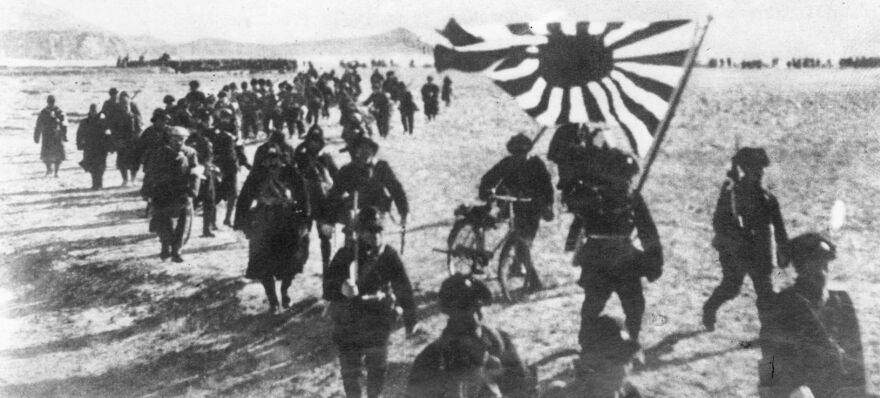
World War II: The War Against Japan and The Pacific Theater

nyssenate31.com – The Pacific Theater of World War II was a vast and complex arena, stretching from the icy waters of the Aleutian Islands to the steamy jungles of the South Pacific, and from the urban sprawl of Tokyo to the remote atolls of the Central Pacific. This theater of war was characterized by its sheer scale, the diverse array of combatants, and the innovative tactics and technologies employed. The conflict in the Pacific was primarily waged between the Allied Powers, led by the United States, and the Empire of Japan, which sought to expand its territory and influence in the region.

The Early Years: Japanese Expansion

The Pacific War began on December 7, 1941, with the surprise attack on Pearl Harbor, Hawaii, by the Japanese Imperial Navy. This audacious strike crippled the U.S. Pacific Fleet, sank or damaged numerous ships, and led to the United States’ formal entry into World War II. Following Pearl Harbor, Japan embarked on a rapid expansion, seizing territories in Southeast Asia, the Pacific Islands, and the Philippines, effectively controlling the majority of the Pacific within months.

The Turning Point: Midway and Guadalcanal

The tide began to turn against Japan in 1942. The Battle of Midway, fought in June, was a decisive victory for the United States. Through superior intelligence and daring tactics, the U.S. Navy managed to sink four Japanese aircraft carriers, dealing a severe blow to the Japanese fleet and marking the strategic turning point in the Pacific War.

Another pivotal moment came with the Battle of Guadalcanal, which lasted from August 1942 to February 1943. This campaign was the first major Allied offensive in the Pacific and resulted in a significant Allied victory. The hard-fought battle marked the beginning of the end for Japanese expansion and set the stage for a long and grueling campaign of island hopping.

Island Hopping and the Road to Japan

The strategy of island hopping, or leapfrogging, was employed by the Allies to bypass heavily fortified Japanese positions and move steadily towards Japan. This approach allowed the Allies to cut off Japanese supply lines and reduce the effectiveness of their naval and air forces. Notable campaigns included the battles for the Gilbert and Marshall Islands, the Marianas, Leyte Gulf in the Philippines, Iwo Jima, and Okinawa. Each of these battles was fiercely contested, with high casualties on both sides, but they gradually brought the Allies closer to Japan.

The Atomic Bomb and the End of the War

By mid-1945, Japan was isolated and its cities were being devastated by conventional bombing. However, the Japanese military and government were determined to fight to the last man, woman, and child rather than surrender. In an effort to avoid a prolonged and bloody invasion of the Japanese mainland, the United States decided to use its newly developed atomic bombs. On August 6 and 9, 1945, atomic bombs were dropped on the Japanese cities of Hiroshima and Nagasaki, respectively. The unprecedented destruction and loss of life caused by these bombs, along with the Soviet Union’s declaration of war on Japan, led to Japan’s surrender on August 15, 1945, effectively ending World War II.

Legacy

The Pacific Theater of World War II was marked by its brutal combat, the use of new and devastating weapons, and the significant loss of life. It reshaped the geopolitical landscape of the Pacific, leading to the rise of the United States and the Soviet Union as superpowers and the beginning of the Cold War. The war also left a lasting impact on the nations involved, with Japan undergoing significant political, economic, and social changes under American occupation. The memory of the Pacific War continues to influence international relations and the collective memory of the peoples of the Pacific region.