nyssenate31.com – Sadza, a staple food deeply ingrained in the culinary and cultural landscape of Southern Africa, shares similarities with East Africa’s ugali. This simple yet essential dish, primarily made from finely ground white maize meal (cornmeal), forms the cornerstone of meals in countries like Zimbabwe, Zambia, Malawi, and parts of Mozambique and South Africa. More than just sustenance, sadza represents tradition, community, and the very essence of Southern African identity.
Origins and Cultural Significance
The history of sadza is closely linked to the introduction and adoption of maize as a primary crop in Southern Africa. Maize, originating in Mesoamerica, arrived in Africa centuries ago through trade routes. Its adaptability to the region’s climate and its high yield made it a vital food source, quickly becoming a staple. As maize cultivation flourished, sadza emerged as a practical and nourishing way to utilize this abundant grain.
Sadza holds profound cultural significance in Southern African societies. It is a dish of unity, shared among families and communities, often eaten communally from a central pot or plate. This communal eating fosters a sense of togetherness and strengthens social bonds. Sadza is also an integral part of many traditional ceremonies, celebrations, and rituals, further cementing its cultural importance. The act of preparing and sharing sadza is often passed down through generations, preserving cultural heritage and family traditions.
Preparing Sadza: A Simple Art
The preparation of sadza, while seemingly straightforward, requires skill and experience to achieve the desired texture and consistency. It involves just two main ingredients: white maize meal and water.
-
Boiling the Water: Water is brought to a rolling boil in a heavy-bottomed pot. This ensures even cooking and prevents lumps from forming.
-
Adding the Maize Meal (Initial Stage – Bota): Initially, a small amount of maize meal is added to the boiling water while stirring continuously with a wooden spoon or whisk. This creates a thin porridge called bota, which is cooked for a short period.
-
Adding More Maize Meal (Thickening Stage): More maize meal is then gradually added to the bota while continuing to stir vigorously. This is the crucial stage where the sadza thickens and develops its characteristic smooth, dense consistency.
-
Cooking and Stirring (Final Stage): The mixture is cooked over low to medium heat, stirring consistently to prevent burning and sticking. The sadza is ready when it pulls away from the sides of the pot and forms a smooth, firm dough.
-
Achieving the Right Consistency: The ideal sadza should be smooth, thick, and firm enough to hold its shape when scooped. It should not be sticky or runny. The texture is crucial; it should be firm enough to be easily picked up with the fingers but soft enough to swallow easily.
Serving and Accompaniments
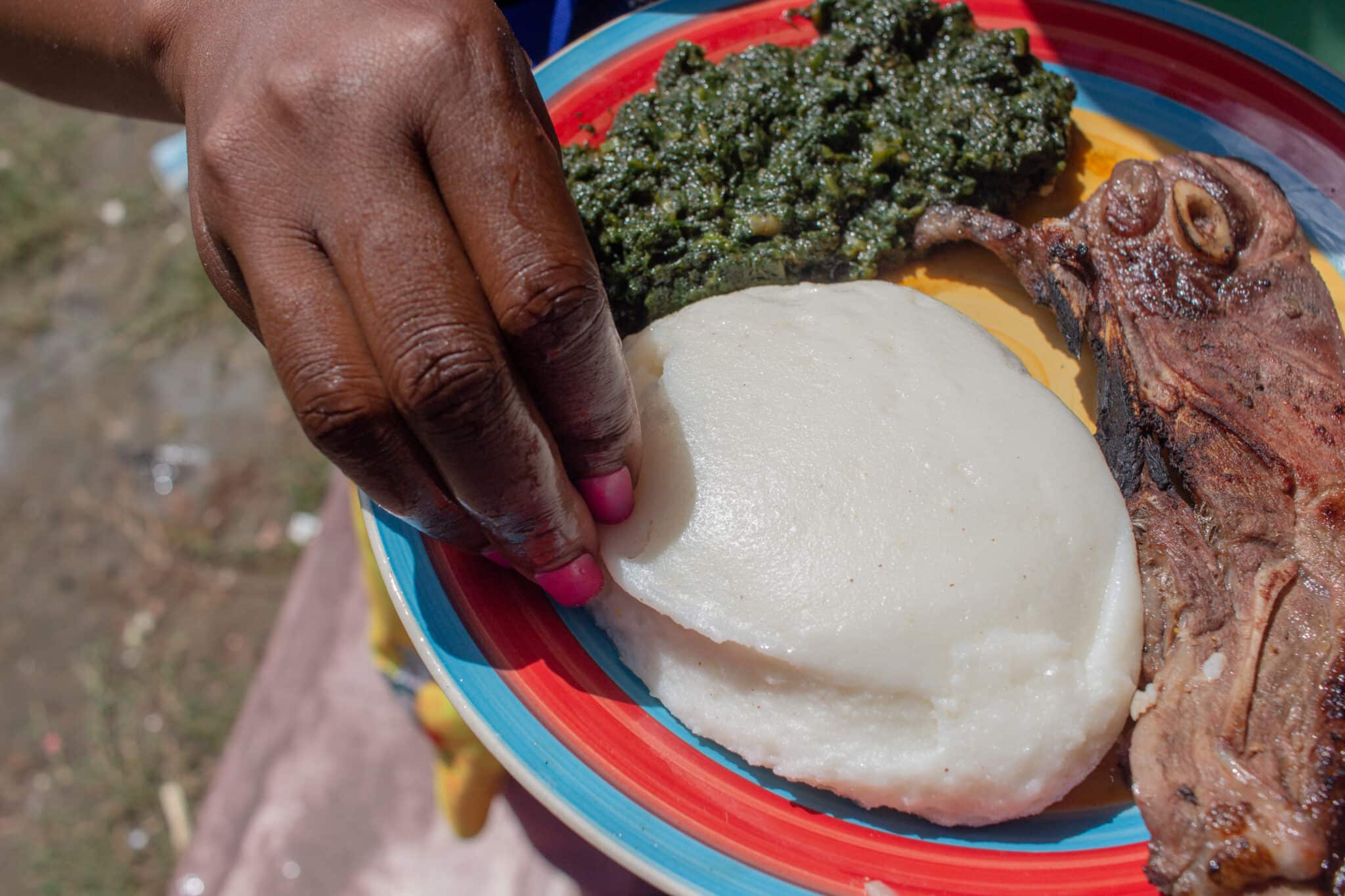
Sadza is traditionally served hot and eaten with the right hand. A small portion is pinched off, rolled into a ball, and then used to scoop up accompanying stews, relishes, or vegetables.
Sadza is incredibly versatile and pairs well with a wide array of dishes, showcasing the rich culinary diversity of Southern Africa. Common accompaniments include:
- Relishes: These are often vegetable-based and can include ingredients like tomatoes, onions, greens (such as rape or collard greens), and peanut butter.
- Meat Stews: Beef, chicken, goat, or game meat stews are popular choices, often cooked with vegetables and spices.
- Bean Stews: A hearty and protein-rich option, providing a good source of plant-based protein.
- Dried Fish (Kapenta): Small dried fish, often cooked with tomatoes and onions, a common and affordable source of protein.
- Soups: Various soups, including peanut butter soup or vegetable soup.
Nutritional Value and Health Considerations
Sadza is a good source of carbohydrates, providing energy. It also contains some fiber, which aids digestion. However, like ugali, it is relatively low in other essential nutrients. Therefore, it’s essential to consume sadza as part of a balanced diet that includes a variety of other foods, such as vegetables, fruits, and protein sources.
The type of maize meal used can affect the nutritional content. Whole grain maize meal is higher in fiber and other nutrients compared to refined maize meal.
Regional Variations and Terminology
While the basic preparation of sadza remains similar across Southern Africa, there are regional variations in terminology and accompanying dishes.
- In Zimbabwe, it is universally known as sadza.
- In Zambia, it is called nshima.
- In Malawi, it is known as nsima.
- In South Africa, it is sometimes referred to as pap, although pap can have a slightly different consistency.
Sadza’s Enduring Legacy
Sadza’s enduring presence in Southern African cuisine and culture underscores its importance as a staple food and a cultural symbol. It represents more than just a meal; it embodies community, heritage, and the spirit of the region. As Southern Africa continues to evolve, sadza remains a constant, connecting generations and representing the heart of its culinary identity.